The more the US wants to pivot away from the Gulf, the more it gets pulled into its vortex, thus teaches history
by Ankineedu Prasad Nallapati*
The more the US wants to pivot away from the Gulf, the more it gets pulled into its vortex, thus teaches history.
Donald Trump rode to power, like former Presidents Barak Obama and Joe Biden, vowing to give top priority to the China challenge and end all the “unending” wars in the Middle East and elsewhere, that his predecessors “foolishly” brought upon themselves.
His National Security Strategy, released in December last, explicitly stated that the American traditional focus on the Middle East will “recede” and the administration prioritize the Western Hemisphere and the Indo-Pacific.
It said the US would challenge China on trade and build up military deterrence around the “first island chain”, an area in the east that includes Japan, the Philippines and Taiwan.
But, that’s not how it’s going.
He is now stuck with his “ill-conceived” Iran war, which he thought would be over in “two or three days.” It still continues. His warnings of obliterating Iran’s power plants no more carry any credibility with Tehran threatening counter attacks on similar targets across Gulf countries.
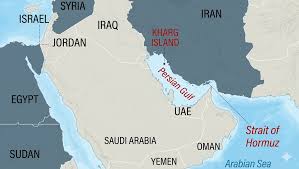
Iran continues to sit tight controlling the Strait of Hormuz, the choke point in the Persian Gulf, as the global economy fast spiraling down.
“Pivot” from Middle East to East Asia Seems A Pipe Dream
President Obama has first launched his “Pivot to Asia” plan in 2011 aimed at countering China’s rising influence, strengthening regional alliances and increasing economic engagement with allies. It was aimed at shifting 60% of naval assets to the Pacific.
He quickly worked through Europe, Russia and China to reach an agreement with Iran, under a “Joint Comprehensive Plan of Action” (JCPOA), that restricted the Islamic Republic’s nuclear armament programme. It was expected to free him for his pivot.
But, his dream project could not take off. His eight years in office had gone into trying to put off the fires in the Middle East – The Arab Spring that toppled Presidents Mubarak and Morsi in quick succession in Egypt and Col Gaddafi in Libya, rise of the ISIS, and civil war in Syria.
President Trump, who succeeded Obama, has reopened the Iran wound, trying to bring it down to its knees, but the latter outlived his first term.
His successor Joe Biden has created a new strategic trilateral security partnership, with UK and Australia (AUKUS) and strengthened the Quad, comprising the US, India, Japan and Australia, to counter China’s growing influence, but the Gaza eruption and the civil war in Syria clouded his limited attention span.
Trump began his second term hoping to quickly deal with the Middle East sores to return to his mainland and China issues, but the Gulf seems to be having the last laugh.
Mediation & Military Build Up
With no end in sight of the current predicament in the Gulf, Saudi Arabia, Egypt, Turkiye and Pakistan wanted to try their hand to open up a channel for prospective negotiations between the US and Iran.
The President is only waiting for such an opening and grabbed it immediately, giving a pause in attacks for five days initially till March 27. He stated that Iran gave him a “big gift” allowing the passage of 10 large oil-carrying ships.
The US, which had long ensured safe passage for merchant ships across the Strait of Hormuz, now sees Iran’s permission as a big gift.
What a fall?
Praising the exchanges, through Pakistan, going well, Trump has extended the pause in attacks for another 10 days to April 6, but Iranian tone is only hardening, adding further demands like the right to levy fees on ships crossing the Hormuz, similar to the one at Suez Canal by Egypt.
Meanwhile, the Department of War’s demand for a $200 billion supplemental budget for war and diversion of its strategic anti-missile THAAD defense systems from US military bases in South Korea and about 2200 marines from Japan, as part of 10,000 ground forces, indicate that the war may not be ending anytime soon.
Mediation Has Minimal Chance of Success
The mediatory efforts, though Trump is exaggerating their significance, appear to have little chance of succeeding.
The clerical regime knows that its control over the Strait is the only leverage it has to force the US and the world to come to terms with it.
Failure to get the Strait open, on the other hand, will have major consequences for Trump’s remaining term in office.
Midterm elections are just six months away and loss of either of the Houses or both would make him a lame duck President. His approval ratings have already plummeted to its lowest level of 41%, with 62% disapproving the war with Iran.
This is the background in which the Trump administration is amassing ground forces and additional anti-missile batteries which are expected to be in position by next week. It may not be a coincidence that his `limited’ ceasefire also ends on April 6.
Trump’s Ultimate Maneuver
The Trump administration is trying to put out feelers that they have achieved their objectives of the war ahead of schedule and will end it soon after some cleaning operations.
They, therefore, appear to be mulling the idea of using the marines to seize Iran’s strategic Kharg island, its oil export hub, along with three other crucial islands to force Tehran to reopen the Strait of Hormuz.
The marines, specialized in amphibious assaults, are likely to use the islands as their base of operations to search and destroy Iranian missile launchers and mine laying boats that are hiding in the coastal coves, threatening shipping across the Strait.
It’s a highly risky maneuver and if it succeeds, Trump would be flying high. If not, he will be doomed, like President Jimmy Carter in 1980, and so the global economy that may take years to recover.
Long Term Implications
Whatever the outcome of the battle for the Strait, the long term damage to the world economy is unmeasurable.
Oil and gas installations in the Gulf countries are severely damaged, particularly in Qatar and the United Arab Emirates. Qatar has already declared `force majeure’ on long term LNG supply contracts as it may take years to bring them back to production.
The damage to Qatar’s Ras Laffan industrial city in Iranian attacks has severely disrupted 30% of global production of helium, a byproduct of the LNG, posing a significant risk to semiconductor manufacturing, medical imaging and space industries impacting healthcare and technological advancements across the globe.
Shortages of Nitrogen fertilizer, another byproduct of natural gas, are already causing concern as next crop cycles are about to start world over that would have long term impact on food security.
With the US threatening to withdraw from its traditional role of securing the global maritime commons for mercantile shipping and other economic activities for common good will only embolden state and non-state actors to grab power and deny rights of others.
China has long been challenging the littoral states of the South China sea with extraordinary claims over their territory and forcefully occupying strategic islands to expand its control over the maritime domain.
Taiwan is highly vulnerable as China considers it a “renegade province” to be reunified.
The IRGC and the Houthis in Yemen have declared their control over the Strait of Hormuz and the Red Sea’s Bab-el-Mandeb choke points respectively, and and if left unchecked, they may start demanding payment for using the passage, further rising logistical costs.
“The Hormuz Strait will have to be guarded and policed, as necessary, by other Nations who use it — The United States does not!”, thus declared Trump in his post on Truth Social last week. He has similarly told his allies, including Japan, South Korea and Taiwan, that they need to put in their own resources to defend themselves.
The problem is not just Trump’s “America First” policy that is behind the US withdrawal. It’s financial muscle is truly weakening, with outstanding national debt reaching extraordinary levels of $40 trillion and Dollar dominance showing signs of gradual erosion.
But, there is no one country or a group of countries that can effectively replace the US to ensure safety and security of the global commons for common good.
A new security architecture is, therefore, to be devised, in which the US will still remain a major player, with other powers chipping in to pool in their resources for maintaining global order.
There are some models already in existence, like the UN International Maritime Organization (IMO), which can be further strengthened with an expanded role.
(*Ankineedu Prasad Nallapati is President of the Hyderabad-based think-tank, Deccan Council for Strategic Initiatives, and former Additional Secretary to the Govt of India)