With high expectations from Gen Z, he must hit the ground running from Day One, and work over time to redeem his pledge of good governance
by Rama Rao Malladi*
Balen era has begun in Nepal. Curtains have come down on the era of the old guard, who, since the end of the monarchy, have dominated the political landscape, while perpetuating political instability in the Himalayan country.
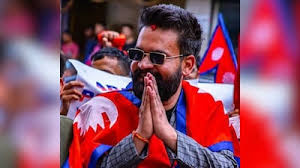
With the 35-year-old–engineer-rapper, son of Ayurvedic doctor and home maker, Balendra Shah, popular as Balen, taking over the reins, the youth era has truly begun in the South Asian nation. The change has come just six -months after frustrated Gen -Z took to the streets.
What a contrast it is to the developments in neighbouring Bangladesh. There too youth and students had hit the streets. And ended the Sheik Hasina era in August 2024 after weeks of mass protests.
But on Feb 12 (2026) Bangladeshis voted her rival, BNP to power; student leaders had found themselves stranded in their stride even after some of them had aligned with the Islamist party, Jamaat, which had tried to sabotage the war for the liberation of the country five decades ago.
Quite opposite was the Nepal verdict in the ballot held on March 5 (2026).
Political Pundits will be busy in the coming weeks and months deciphering the two results.
My view is that the results show the difference between an organic movement and a manufactured campaign.
This take in no way belittles the significance of Tariq Rahman’s victory. He has crafted his march as much on the legacy of his mother, Khaleda Zia as on the factors that had contributed to the downfall of Hasina.
I see his victory as a rejection of the Islamists as also the interim Tzar, Muhammad Yunus, the Nobel laureate, who had never tried to hide his political ambitions even before he had entered the banking sector as the messiah of the poor.
Balen’s chart busting songs articulated Gen Z (42.5 percent of the population) concerns over what is wrong with the governance in the country. As the ‘Independent’ Mayor of Kathmandu, he endeared himself with every segment of the society by giving a makeover to the capital. And thus became the natural choice to lead the Rashtriya Swatantra Party (RSP) at the hustings. He ended up as the giant killer by defeating four times Premier K P S Oli in what was the latter’s safe seat. And his party swept the polls winning a near two-thirds majority in Parliament.
According to media reports, Balen did not give any long electoral speeches. Yet, youth and crowds followed him wherever he went. So much so, now he must hit the ground running from Day One, and work over time to redeem his pledge of good governance. Also, job creation by investing in education and skill training.
The war of mavericks in the Middle East is resulting in the return of many Nepali youth and they need to be provided with some employment, which will be possible if infrastructure projects are prioritised with an eye on tourism and energy exports.
Some Nepali columnists consider Balen as an enigma despite his guts and nerve to fight KPS Oli. Chutzpah does not always translate into good leadership according to this school, which approvingly quotes Churchill to say that Balen, despite becoming the face of RSP, remains a riddle wrapped in a mystery inside an enigma.
Such epithets may be unfair to the youth icon who is untainted by the evils of the Nepali political class and has held an open mirror to his mind.
Nevertheless, there is no gain in saying that he should guard the RSP turf from going the Nepali Congress way or the way of the Communist amoeba with large size ego clashes. More so, Rabi Lamichhane, the founder and chair of the RSP remains mired in controversies, as a leading Kathmandu daily points out. Simply put, Balen does not enjoy, like conventional politicians, the luxury of trotting out excuses.
Significantly, Balen is the first Prime Minister from Terai – the region inhabited by Madhesis. The four-year -old RSP has virtually swept the region. Observers note that the idea of a Madhesi Premier at the helm of national affairs was unimaginable even a decade ago. It became possible because political fault lines are no longer on the headlines.
It is difficult to resist the remark that the Madhesi’s every act is invoking symbolism related to Ramayana. He has taken over as the PM on Ram Navami – a day that heralds Ram’s return to Ayodhya after killing demon king Ravan. This day marks Ram – Sita marriage as well. Balan’s poll campaign was launched from Janakpur, which Nepalese considered the birthplace of Sita. It is the spiritual centre of the Madhesh in the Southern Terai region.
The message from these optics?
Well, it means Balen is reassuring the Hindu majority of the country that he is not cut in the mode of Olis and Prachandas, the Communists. Nothing more nothing less. Both he and the Gen -Z have seen the sun after the monarchy became history.
Balen has made his mark as an outsider to the system; he had cut his first single ‘Sadak Balak’ fourteen years ago while in the ninth grade. The track focused on the immediate – hardships of urban youth. It heralded his entry into the headlines. By 2013, his visibility increased with his participation in the YouTube battle rap series ‘Raw Barz’. Over the next decade, Balen became a youth icon. In 2025 the song ‘Nepal Haseko…’, which he wrote, composed, and performed; it entered the YouTube trending music charts.
And ahead of his swearing, Balen released a rap song titled Jay Mahakali. ‘The strength of unity is my national power’ he sang in Nepali, adding, “Undivided Nepali, this time, history is being made”.
SINO – NEPALI TIES
A significant development that will have a bearing on the Sino-Nepal relations took place at Morang in Eastern Nepal. Morang is an Outer Terai district which begins south of the Shivalik Hills and extends to the Indo-Gangetic plains and has Bihar to its south.
What happened in Morang just a week before the Balen government assumed office – was something unexpected – burning down thousands of copies of Xi Jinping’s book – ‘The Governance of China”.
In one video clip that has gone viral, some people are seen holding up Xi’s book to the camera.
The embassy of Zhongguo (Middle Kingdom) as China is known even now, reacted sharply. It shot off a note verbale to the Nepalese Ministry of Foreign Affairs, urging prompt action against those involved in the burning of the book at Manamohan Technical College in Budhiganga, Morang.
How and why so many copies of the Chinese Prez book were kept at the college is unclear. It is possible that large numbers of the book were acquired during the Oil era and stored at the college, which is an Oli party venture. A senior UML leader, and former deputy prime minister Ishwar Pokhrel, is the College President since November 2019.
LEGACY ISSUES WITH BEIJING
There are also other ‘legacy’ irritants in Sino-Nepal relations that will call for some deft handling.
One such irritant is the visit by Rinpoches (Tibetan spiritual leaders) to Kathmandu. At China’s request, the interim Sushila Karki government did not allow one Rinpoche to visit Nepal last month.
Corruption involving Chinese firms (engaged at the Pokhara International Airport project), as also cancellation of telecom tenders and decisions on 5G contracts involving Chinese Huawei are amongst the other irritants
LIPULEKH PASS TRADE
The Sino-Indian push to resume Lipulekh trade also will be an early diplomatic test for the new Rashtriya Swatantra Party government, more so as the new Foreign Minister Sishir Khanal had articulated last year the Nepalese concerns as head of the international department of the party.
After a six-year gap, India and China are resuming border trade through the Lipulekh Pass this year. The trade season normally is from June to September.
The pass is in the Pithoragarh region of Uttarakhand province of India.
Known as Pulang-Gunji in the local Tibetan dialect, Lipulekh is one of the three villages (Limpiyadhura and Kalapani are the other two villages) in the Mahakali river basin.
It became a near flash point during the Oli regime, which claimed that Nepal consistently asserted its claim over the area and even carried out a cartographic exercise in 2020 through an amendment to the constitution.
“Without Nepal’s facilitation, India and China cannot conduct trade via Lipulekh but, without taking our prior consent, both India and China have been entering into new agreements despite our strong reservations and protests”, Dinesh Bhattarai, a former Nepali diplomat is quoted as saying in local media. According to him, “The new government should take up the matter with both India and China in the strongest terms”.
India’s case is that its trade through Lipulekh is not a new development. It has been happening since decades.
Well, Covid disrupted the border trade. Both sides have since agreed to resume it, as Randhir Jaiswal, spokesperson for India’s Ministry of External Affairs, puts it. Nepal’s territorial claims are “neither justified nor based on historical facts and evidence,” he says, while describing them as “untenable”.
India remains open to “constructive interaction” with Nepal on outstanding boundary issues, Jaiswal added in a recent media interaction in New Delhi.
With trade season nearing, officials at Pithoragarh have begun preparations for facilities for traders, who will be doing business along the Himalayan route. The Indian side is also working to improve coordination with their Chinese counterparts.
This digression while on Balen story is only to underscore the ground reality the youthful Prime Minister faces on the diplomatic front while pursuing the Home Agenda which made him a darling of the masses.
On his part, the Indian Prime Minister has assured Balen that he can count on New Delhi.
Warmly congratulating the structural engineer who did his post-graduation in the Silicon Valley province of Karnataka, Narendra Modi said: ‘Your appointment reflects the trust reposed in your leadership by the people of Nepal’, and stated that he looks forward ‘to working closely with you’ to take India-Nepal friendship and cooperation to ‘even greater heights’.
(*Rama Rao Malladi is New Delhi-based senior editor with extensive experience of covering subcontinental developments. He is currently a senior analyst with Hyderabad-based think-tank, the Deccan Council for Strategic Insights)