by Prasad Nallapati*
The US `Economic D-Day’ sanctions against Iran, said to be the biggest penalties so far to bring the latter to its knees, mark the “third phase” in their efforts to find a side ramp to get out of the Gulf quandary.
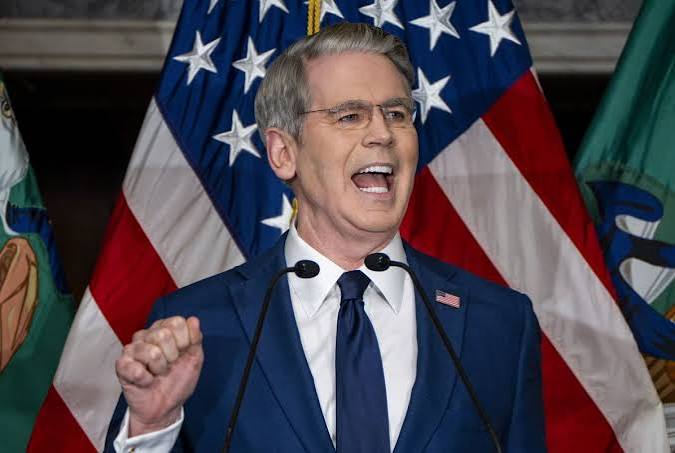
Treasury Secretary Scott Bessent is the new face of this phase and his `bad cop’ posture is all too familiar.
Previous attempts of Vice President J D Vance’s diplomacy and Secretary of War Pete Hegseth’s military bluster have proven to be a futile exercise.
Returning to the long failed strategy of economic sanctions only goes to prove `history blindness’ of the Trump administration. Iran has been under such sanctions since the Islamic Revolution of 1979 that brought the Ayatollahs to power.
Secretary Bessent claims that the sweeping economic campaign is designed to enforce a `zero-leakage’ approach, targeting any nation, entity, or individual doing business with Iran.
But, he left a giant hole uncovered, at least for now.
That is, of course, China, an ally of Iran.
Eco D-Day’s Giant Hole
President Trump believes that he can make a deal with his counterpart Xi Jinping, whom he refers to as his “friend”. He has gone lite on China after his Beijing summit in May and is looking forward to their forthcoming meeting in Washington next month.
Over 60 fresh foreign entities are brought under the new economic sanctions, including four Indian ones, but Chinese financial institutions and its big shipping companies have been spared.
Chinese ships had enjoyed free passage through the Straits of Hormuz during the months that Iran had full control over it and amassed a billion barrels of highly discounted Iranian crude. They were largely spared even during the American blockade of the waterway.
Not just the Hormuz, the Chinese had even an easy run through the Houthi controlled Bab al-Mandab waterway carrying Saudi crude from the latter’s Red Sea port of Yanbu.
The volumes of crude intake has now come down by 61% from the April peak, when China imported 2.62 million b/d through the Bab al-Mandab, according to a report in the Nation. The crude imports from the waterway were 940,000 bpd in July and 1.02 million in August upto 25th.
China’s Hormuz volumes have also declined 36% bpd in July-August from the first half of the year.
Although the Chinese imports of Iranian crude have dropped by half since the war began, it has still maintained a substantial flow of 800,000 b/d, thanks to Iran’s floating storage outside of the Gulf.
While Iran’s August crude exports from its oil terminals have so far been minimal, averaging only slightly around 0.3 million b/d, due to the US blockade of its ports, it has about 24 million barrels in floating storage on ships outside of the Gulf, according to OilPrice.com.
Chinese buyers are mopping up the last remaining volumes, which are expected to last till October.
Indian companies, on the other hand, could import just about 133,000 b/d of Iranian oil during the brief US waiver in April.
Four Indian companies are now sanctioned for their spot purchases of Iranian oil in April, while the Chinese entities go unscathed despite their continued purchases.
The contrast is too obvious.
China and Iran are happily engaged, while the US continues its empty vitriol.
The Trump administration’s bombastic rhetoric of Iranian collapse under the weight of the current “Economic D-Day” sanctions is, therefore, more laughable than to be taken seriously.
(*Prasad Nallapati is President of the Hyderabad-based think-tank, “Deccan Council for Strategic Initiatives”, and former Additional Secretary to the Govt of India)