The rationale for what appears to be `disruptive and impulsive’ foreign and security policies’ of President Trump is now getting clear as his administration is preparing to bring out its strategy paper
by Ankineedu Prasad Nallapati*
The latest in the White House firing line are the Baltic states of Estonia, Latvia and Lithuania, bordering Russia, which are notified of the prospects of withdrawing some of the American forces from their territories and cutting funds to the Baltic Security Initiative that meant to help build up their defenses and military infrastructure.
Coming in the background of Russian military aircraft and drones violating the airspace of the NATO countries of Estonia, Poland and Romania, the proposals sent chills down the spine of the Baltics, forcing them to appeal the US Congress to maintain their military assistance.
The NATO member countries have already been put on notice by Trump to increase their defense budget to 5 % of their GDP and also prepare for pull out of some of the American forces and equipment from Europe. The EU is also told that Ukraine is their problem and they need to find ways to defend it.
The Baltic countries were formerly Soviet Republics and are now members of the NATO, EU and other European bodies. Trump administration’s refusal to come to the rescue of Ukraine, under siege from Russia, has created doubts of his honoring even the binding Treaty obligations.
The US has defense treaties with East Asian nations of Taiwan, Japan and South Korea to protect them from Chinese military aggression but current American posture is eroding their confidence compelling them to enhance their own defense budgets.
Taiwanese President Lai Ching-te was denied permission in July to stop over in the US in what is said to be an effort to please China as Trump is preparing to visit Beijing to meet Xi Jinping and sign a new trade pact.
What’s Going On
The rationale for what appears to be `disruptive and impulsive’ foreign and security policies of President Trump is now getting clear as his administration is preparing to bring out its strategy paper soon.
A draft of the new National Defense Strategy is now with Defense Secretary Pete Hegseth and according to the Politico, it forms a major shift from previous administrations and prioritizes the Homeland and Western Hemisphere above countering adversaries, China and Russia.
The document does recognize that China and Russia “want to shape a world consistent with their authoritarian model,” and the US is still expected to pursue the containment of China and Russia.
However, political analyst Andrew Korybko says that the US will do that more through proxies, “AUKUS+ vis-a-vis China and NATO vis-a-vis Russia,” without its direct involvement.
He further writes that the strategy appears to recognize the failure of Biden Administration’s “dual containment” of the Sino-Russian Entente and Trump 2.0’s own Eurasian plan of strategic partnership with Russia to deprive China of the resources for its superpower trajectory.
President Putin’s unwillingness to agree to major territorial and security concessions in Ukraine in exchange for such US-Russia ties has put Trump in a dilemma.
Added to this is the rush of the `Global South’ nations to join the anti-western geo-political groupings, the Shanghai Cooperation Organization (SCO) and the BRICS, in an attempt to diversify their economic and financial options.
The US President and his strategists have apparently come to a conclusion that the “restoration of unipolarity is impossible and more complex multipolarity might thus characterize the coming years.”
Flowing out of this conclusion is the strategy to “focus more on the Homeland and Western Hemisphere than on directly containing the Sino-Russian Entente to reverse the decline of the US’ unipolar hegemony in its half of the world.”
Focus on Homeland and Western Hemisphere
The new strategy to prioritize domestic and regional security has already been brought into play.
The Pentagon has deployed thousands of National Guard troops for law enforcement duties in Los Angeles and Washington DC, and more are expected to be sent to other cities.
Naval ships and fighter planes are dispatched to the Caribbean to monitor and interdict flow of drugs to the US. At least three boats from Venezuela, reportedly carrying drugs, were fatally bombed in the last few days.
A militarized zone was established across the southern border with Mexico.
The new National Defense Strategy paper is expected to be released next month, along with two other policy documents, “Global Posture Review and Theater Air and Missile Defense Review,” which together determine target areas, positioning of forces around the globe and deployment of air defenses.
Such strategy papers are brought out at the beginning of each administration. Elbridge Colby, the Pentagon’s policy chief, is the lead strategist authoring the policy papers. He is said to be a staunch supporter of a more isolationist American policy and aligns with Vice President JD Vance on the desire to disentangle the US from foreign commitments.
Regional Partners Empowered To Secure Their Areas of Influence
The current American posture in Europe and Asia can thus be understood from the new strategy of the Trump 2.0 that looks more inward than containing China and Russia.
Regional partners are expected and empowered to make local coalitions to police their own spheres of influence so that the US is spared from getting embroiled in others’ conflicts. Logistical support and military equipment can be provided, though for a price.
India does not fit in this new scheme of things as containment of China in Indo-Pacific region is no more a priority. It is seen more a liability as it refuses to fully align with American policies in the name of its so called policy of `strategic autonomy’.
The Quad, comprising the US, India, Japan and Australia, formed to check China’s expansionism in Asia has been put on cold storage. President Trump has cancelled his proposed visit to New Delhi later this year to attend the Group’s summit as Indo-US relations nosedived.
Another regional group, AUKUS+, is expected to deliver that function with Australia and the UK footing the bill to build a submarine base in the former’s Osborne Shipyard. Japan is invited to join to strengthen the military coalition.
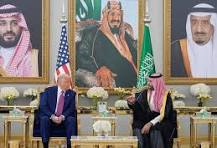
The Saudi-Pakistan `Strategic Mutual Defense Agreement’, signed last week, has the American blessings. The Gulf Sheikhdoms are encouraged to invest in their own defense without expecting the US to come to their aid.
Coming in the background of Israeli missile attack on Qatar, the pact is seen as a Saudi effort to expand its military options to protect itself.
The accord says “any aggression against either country shall be considered an aggression against both,” but doesn’t specify any duty to employ military force in their support.
Saudi Arabia faces no threat from Israel as it has close ties with the Jewish state and harbors no terror groups. Its real threat is from Iran-backed Houthis in Yemen but recent detente between Riyadh and Tehran has diminished chances of such attacks.
The pact is, therefore, more of symbolism than having any real substance. The two countries have a security agreement for a long time and Pakistani troops are stationed in the Kingdom.
Pakistani Defense Minister’s boasting of making its nuclear weapons available to Saudi defense can thus be seen more a rhetoric to be taken seriously.
Conclusions
There are glaring contradictions between President Trump’s global ambitions of making the world prostrate before him and his administration’s new strategy of shunning any responsibility for global security.
He wants the Nobel Prize of Peace claiming that he has ended “seven wars” while amply demonstrating his frustration and lack of diplomatic niceties to end the real wars in Gaza and Ukraine.
These contradictions may ultimately unravel his experiments with new strategies diminishing real American power and dominance of the world.
(*Ankineedu Prasad Nallapati is President of the Hyderabad-based think-tank, `Deccan Council for Strategic Initiatives’ and former Additional Secretary to Govt of India)