The World is stepping into an unpredictable new world with currently available tools being inadequate to safely navigate turbulent times ahead
by Prasad Nallapati*
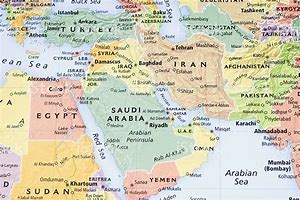
Forget West Asia that we know of. It’s no longer there.
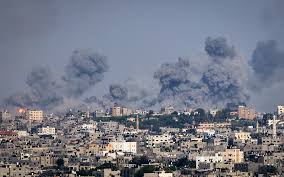
The US and Israel have stirred up a hornet’s nest that has set out to create a new regional order that no one seems to have control over.
American security umbrella, which had effectively protected regional Gulf allies, has developed chinks forcing them to run helter-skelter in search of alternative arrangements.
The US has shuttered its military bases around the Gulf and moved forces to Jordan and Israel for safety from Iranian aerial attacks.
American troops in Iraq, which were initially deployed in 2003 to capture its ruler Saddam Hussein and later expanded for anti-ISIS campaign, have finally left last week, giving Iran a tactical victory. Further, a potential Iranian drone attack led to exit of US bombers on Sunday from the Fairford airbase in the UK, which was used for attacks on the Islamic republic.
The dream of a Palestinian state, next to Israel, not only lies shattered, but the very existence of the Palestinian people is itself in question as Israel led by Benjamin Netanyahu is carrying out a systematic ethnic cleansing in Gaza and the West Bank.
Radical Islamist forces, like the al-Qaeda and the Muslim Brotherhood, which had earlier failed in their efforts to capture state power, are finding new paths to political authority. Ahmed al-Shara, who led the former al-Qaeda affiliate of Hayat Tahrir al-Sham (HTS), is now the President of Syria.
Saudi Arabia has coopted radical forces in south Yemen, which it shunned earlier, to fight Iran-backed Houthi rebels in the north. The power sharing arrangement will see the Salafis in top leadership roles in the Saudi-backed government.
How Is West Asia Shaping Up
The Trump administration has deployed all its energies in West Asia in its last-ditch effort to ensure free flow of Arab oil through the Strait of Hormuz while cutting off all sources of income for Iran in an attempt to force its “surrender.”
Its third aircraft carrier, the USS Theodore Roosevelt, is on its way to reinforce the American arsenal in the region. Its naval blockade of Iranian ports has successfully brought the latter’s crude oil tanker loadings to zero, effectively choking off their foreign exchange earnings.
Crude oil flows from the Arab countries returned to pre-war levels of 11 million barrels a day with the US naval ships escorting tankers out of the straits.
That has not deterred Iran yet, as it continues to selectively attack ships passing through the Straits, without its permission.
Despite choking off its oil exports from Kharg island, Iran still has supplies on ships heading toward China. These supplies are expected to last till the end of this month and payments will continue to be coming until December.
Meanwhile, Western military experts believe that the US Navy may have less than six months of blockade capacity left in it before maintenance and equipment shortfalls force compromises in how it surveils, blocks Iranian ports and escort ships across the Strait of Hormuz.
Further, high chances of the Republicans losing one or both houses of the Congress to Democrats in midterm elections in four weeks may hinder Trump administration’s choices to pursue the war with Iran.
Both the US and Iran are, thus, staring at an uncertain period ahead, though the Islamic republic has a better holding capacity than the “lonely” super power.
Iran had held itself for eight years (1980-88) ultimately defeating Saddam’s Iraq, which was backed by the combined forces of the US and Arab countries.
Abandoned by US, MbS Turns to Oil Price Manipulation and Islamists’ Support
The US abandonment of Saudi Arabia began much earlier during the Obama administration with its undeclared policy of “no more unconditional support to Saudi monarchy.”
Obama’s initial support to Arab Spring that had brought Muslim Brotherhood to power in Egypt and threatened other traditional regimes of the region and his reluctance to intervene militarily to overthrow Bashar al-Assad government in Syria have not gone well with the Saudis.
Cushioned by increased domestic supplies of oil, which reduced US dependence on Saudi energy security, and propelled by his policy of pivoting to East Asia to contain China, President Obama weighed in on empowering Iran to jointly manage the region with Saudi Arabia.
The Saudis, however, smelled a rat.
The US nuclear agreement with Iran is seen as a direct security threat while the prospects of Iranian oil flooding global markets as ending Saudi dominance of energy markets. Riyadh has long been the leader of the Organization of Petroleum Exporting countries (OPEC), through which it controlled price and production of oil through state-wise quotas.
The young Crown Prince, Mohammed bin Salman (MbS), who rose to power through political maneuvering and suppression, activated a suit of measures to counter Obama’s policies like lobbying with Republicans, along with Jewish organizations, and manipulation of oil prices, in coordination with Russia as part of extended OPEC+.
This has worked temporarily with Donald Trump getting elected as President for the first term and rescinding Obama’s policies in the region.
MbS’s fortunes, however, did not last long. His involvement in the brutal killing of political opponent Jamal Khashoggi in Saudi consulate in Istanbul brought massive wrath from Trump’s successor, President Biden.
The Crown Prince has again resorted to manipulation of oil prices, leading to hike in retail prices in the US, to pressure the Biden administration to back the Saudi leadership.
This has parallels with the situation in the 1970s when the Shah’s Regime in Iran had played a similar OPEC card to pressure the US to support his moves for regional domination.
That, however, had had unintended consequences leading to the 1973-74 global oil crisis, which prompted the US to join up with Saudi Arabia to stabilize oil prices and undermine the Shah’s ambitions, which eventually led to his fall and rise of the Ayatollahs.
President Biden was too weak to respond effectively, but Trump’s return to power changed all the equations.
Tasting instant success in capturing Venezuelan oil resources, he rushed into the war with Iran in the hope of changing its regime and wresting control of its energy installations while preparing to teach a lesson to the Crown Prince.
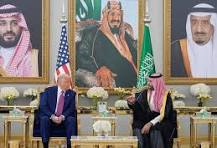
Trump’s coldness toward MbS can be felt from his scornful descriptions of him. “He (MbS) didn’t think this was going to happen. He didn’t think he’d be kissing my ass.” He added, “MbS thought he’d be just another American president that was a loser. Now he has to be nice to me.” In another recent statement, Trump said, “Saudi Arabia wouldn’t be here” without him.
MbS, obviously, overplayed his OPEC oil cards and lost the game like his Iranian predecessor.
Saudi Arabia can no more look to American protection, and it was laid bare as the Iranian and Houthi missiles hitting its energy installations. He has also broken ranks with his long-time mentor and UAE President, Mohammed bin Zayed (popularly known as MbZ), who walked away from the OPEC.
Left out in the cold, he was desperate to knit together “grand” Sunni coalitions to protect the House of Saud, putting aside ideological differences. These include the Mecca Defence Alliance with Turkiye and Pakistan and partnership with the Salafi group of `Southern Giants Brigades’ (known as Al-Amaliqa) in southern Yemen to fight the rebel Houthis.
These alliances are yet to prove their worth to protect Saudi Arabia or strengthen MbS’s position.
Many other Sunni countries, like Egypt, have been approached to join the Alliance, but they were reluctant in view of Cairo’s past experience of empowering Salafi groups during the Arab Spring.
US Too Leaves `Middle Path’ Giving Way To Extremist Ideologies
It’s not just West Asia, the United States too has changed.
The two mainstream political parties have been taken over by extremist forces. The MAGA (Make American Great Again) movement of the Republican Party began as a savior of struggling white working class people but soon exposed its `racist’ tendencies.
Moderate party leaders, who opposed to ideologies represented by President Trump, are not able to survive.
The Democratic Party too has gone to the other end with left-wing, socialist candidates winning recent elections like the New York City Mayor of Zohran Mamdani and Senate nominee from Michigan Abdul El-Sayed. Islamist groups and local mosques are deeply involved in canvassing for these candidates.
This collaboration between the left-wing and Islamist ideologues have long been critical of the Indian socio-religious fabric and the ruling BJP government headed by Prime Minister Modi. Their “wokist” ideologies are out to condemn Indian society without understanding historical background.
The animal spirits of Evangelical white nativism and left wing – Islamist coalitions do not augur well either for the global leadership of the US or for stable world order.
The US allies are hoping that old equations would be restored after Trump leaves office, but their optimism may prove to be more a wishful thinking. .
Navigating the New World Order
We are, thus, stepping into an unpredictable new world with currently available tools being inadequate to safely navigate turbulent times ahead.
It’s equally dangerous to allow the Peoples’ Republic of China a free hand to shape the world as it is highly disruptive.
The United Nations is, in its current form, a helpless creature. But, it is still the only hope that can bring a semblance of global stability. It has to go through thorough reforms in its structure before it can be expected to play its destined role.
The `global south’ led by India, the UAE, Brazil, Indonesia and other regional leaders will have to intensify their efforts for an unified position to pressure major powers to collectively act to bring an orderly transition to a new world order. Forming a `core group’ of special envoys or foreign ministers may be a first step in that direction.
(*Prasad Nallapati is President of the Hyderabad-based think-tank, “Deccan Council for Strategic Initiatives” and former Additional Secretary to the Govt of India)